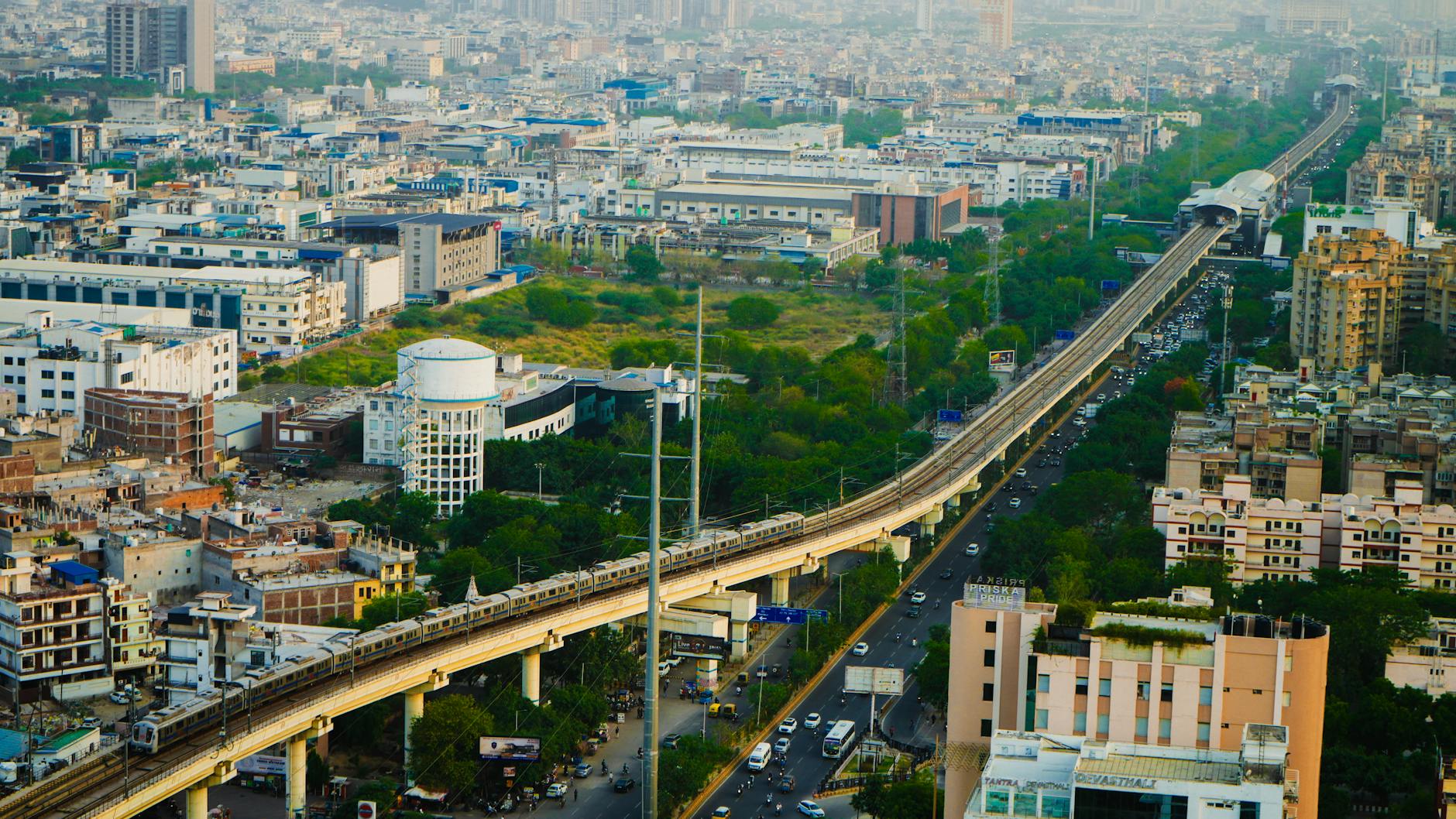

Affordable Gurugram Housing: How to Get a Home Under ₹50 Lakhs
Discover step‑by‑step how to buy a home in Gurugram for less than ₹50 lakhs. Learn about schemes, eligibility, documents, and financing options tailored for first‑time buyers in 2026.
Gurugram’s real‑estate market is often seen as elite, yet homes under ₹50 lakhs are now attainable. With the latest government schemes, smart financing, and careful property hunting, first‑time buyers can secure a plot or apartment without breaking the bank.
Gurugram housing, affordable homes India, PMAY K, 4 B 20 C scheme, Gurugram real estate, first‑time homebuyer, rupee loans, NEFT, home loan eligibility, property registration
Affordable Gurugram Housing: How to Get a Home Under ₹50 Lakhs
For many Indians, Gurugram’s skyscrapers and corporate hubs represent prosperity, but the same city also offers pockets of affordable housing—some places even selling for under ₹50 lakhs. This guide explains the practical steps, schemes, and financial tools that make such properties reachable for first‑time buyers in 2026. Whether you’re a fresh graduate, a small‑business owner, or a newly married couple, you can learn how to assess options, secure a loan, and legally own a home in one of India’s fastest‑growing metros.
1. Know the Market: Where to Find ₹50‑Lakh Homes in Gurugram
Gurugram’s high‑end neighborhoods—Sohna, Sector 65, and Golf Course Road—are out of reach for a ₹50 lakhs budget. However, emerging streets such as Sector 73, NH 48 corridor, and the old Faridabad‑Gurugram border cluster offer small plots, 1–2 BHK apartments, and vacant land parcels that fit the price bracket. Websites like OLX.in, Nobroker.in, and MagicBricks.com list off‑market offers filtered by price and area. Inspect the site plans, check for connectivity to the nearest metro station (Sector 74 or Dangaiganj), and ensure that the land has a valid Shop & Establishment certificate if you plan to run a small business.
Typical plot sizes range from 150 sq ft to 300 sq ft, with prices around ₹18–₹25 lakhs for 4 sq yd lots. For land price to stay below ₹50 lakhs, buyers often look at “freehold” plots that are slightly older or have a smaller footage (e.g., 200 sq ft). Alternatively, pre‑commercial or “mixed‑use” dense flatlets in the “Green Building” focused mixed‑use areas can occasionally be found within the threshold due to government incentives.
2. Leverage Government Housing Schemes
The central government’s Pradhan Mantri Awas Yojana (Housing for All) – K (PMAY‑K) offers a 6 % interest rate to salaried and self‑employed employees on home loans up to ₹45 lakhs. For G‑slabs (social housing) below ₹25 lakhs, the Ministry of Housing also offers a 5 % interest rate under the 4 B‑20 C scheme. Eligible families include those whose annual income does not exceed ₹3.5 lakhs (joint) and who meet the social classification criteria (SC/ST/OBC/BPL).
Additional subsidies come from the National Housing Bank (NHB) – Affordable Housing Programme (AHP), which partners with regional banks such as COOP Bank and Bank of India to provide loans at 5–6 % interest. Recent data from NHB shows that in 2025, 35 % of affordable housing loans were sanctioned at this rate. Note that the scheme is available only for settlements that have been notified by the Ministry; check the latest notifications on pmaymis.gov.in.
3. Prepare a Solid Loan Application – Steps & Documents
- Check Eligibility: Use the IFSC code calculator on your banking app or bank’s website to see if you meet the income threshold. Ensure your KYC—Aadhaar, PAN, and bank account details—are up‑to‑date.
- Gather Documents: For PMAY‑K, you need:
- Identity proof: Aadhaar, PAN, Driver’s licence
- Income proof: Recent 3 months’ payslips (if salaried), Form 16, or last 2 years’ income tax returns (if self‑employed)
- Bank statements: 6 months of statements showing ≥₹25 k balance
- Property documents: Sale deed, no‑objection certificate (NOC), land records (plot number, boundary survey)
- Apply online on pbwo.gov.in or through your bank’s home loan portal. Upload the digitised PDFs, fill in the application form, and submit. Keep a printout of the application ID.
- Await verification: The bank will cross‑check the documents. If any are missing, you’ll be notified via SMS or email.
- Final sanction: Once the underwriting is complete, the bank will issue a sanction letter mentioning the sanctioned amount, interest rate, and processing fees (typically 0.75 % of the loan amount).
- Sign the Loan Agreement: After approval, you receive the sanctioned letter and the loan agreement on the same day. Verify the printed details before signing.
Processing time is usually 7–10 days for first‑time applicants if all documents are compliant. For additional velocity, choose a bank that offers a ‘one‑stop’ advisory service like HDFC Bank Real Estate Solutions.
4. Understand Property Transfer & Registration Costs
When buying a plot or flat, you need to factor in transfer taxes, registration fees, stamp duty, and legal costs. In Haryana, stamp duty on residential property is 4 % of the sale value (or RM, whichever is higher). The registration fee is a flat 2 % of the property value or RM. Legal fees for a registrar’s appointment average ₹15 000–₹25 000. In Gurugram, an additional ‘municipal cess’ of ₹1.5 k is levied on all real‑estate transactions. Adding a contingency of 3 % of the purchase price for taxes and fees ensures you remain within the ₹50 lakhs ceiling.
If you’re buying a 2 BHK off‑the‑shelf flat (cost ₹35 lakhs), your total out‑of‑pocket cost could be around ₹41 lakhs after including stamp duty, registration, and legal fees. A realistic budgeting strategy is to keep a reserve of ₹5 lakhs for unforeseen expenses.
5. Explore Alternative Financing: Co‑financing & Co‑ownership Schemes
When a single loan amount exceeds the affordable limit, you can explore co‑financing. Many banks allow joint applications with a spouse or a close relative, spreading the debt across both incomes. For example, a ₹4 lakh loan can be split 75:25 between two borrowers, thus qualifying for a higher interest rate but enabling purchase of a ₹50 lakhs plot.
Another avenue is the Co‑ownership Development Scheme promoted by the City of Gurugram under its ‘Affordable Housing Initiatives’. Applicants can purchase a share (e.g., 50 %) of a completed apartment and later sell the remaining share to a government body or a private developer. The scheme offers a 5 % reduction in stamp duty for the first transfer. While the process takes longer, it guarantees legal ownership within two years.
6. Verify Legal Status & Due Diligence
- Land Records: Access the Haryana Land Records portal (hlr.org.in) to confirm the plot’s legal status. Check for encumbrances, liens, or pending dues.
- Encroachment Check: Ensure the land hasn’t encroached on public roads or common land by consulting the Municipal Corporation’s zoning map.
- Punjab & Haryana Co‑Operation: For plots near the Haryana‑Punjab border, verify cross‑state approvals from the Haryana State Development and Planning Board (HSDPB).
Non‑compliance in any of these checks can lead to future legal disputes or a forced sale. Hiring a local chartered accountant or a registered real‑estate agent for a property inspection is highly recommended.
7. Closing the Deal – Final Checklist
Before handing over the money, confirm that:
- The developer or seller has a valid Sale Agreement with a signed original.
- All documents are certified by a sub‑registrar.
- The property is free from pending tax dues and has complete utilities (water, electricity, gas).
- You have a copy of the updated HOA (Home Owners Association) Agreement if applicable.
- The final proforma reflects the total cost, including a contingency for registration fees.
Once satisfied, transfer the funds via a NEFT/RTGS transaction to the seller’s bank account using the official *Udyog Aadhaar Registration Number (UAN)* provided on the sale agreement. Retain the receipt for audit purposes.
8. Post‑Purchase: Maintaining Your Home Under Budget
Affordable homes can be more maintenance‑intensive. To keep costs low:
- Install a water‑harvesting system to reduce monthly water bills.
- Use LED bulbs and energy‑efficient appliances to cut electricity costs—check the latest *Better Energy Rating (BER)* certification for appliances.
- Maintain a routine wash‑out for the roof and check for seepage at the foundation, especially during monsoon months.
- Register your property with the local municipal body (Gurugram Municipal Corporation) to avoid late payment penalties.
By following these steps, you can own a Gurugram home under ₹50 lakhs and still enjoy the city’s connectivity and opportunities.
Key Takeaway
If you’re a first‑time buyer, start with a quick market analysis of emerging sectors, confirm your loan eligibility under PMAY‑K or 4 B‑20 C, prepare the exact documents, and avoid hidden costs by verifying all legal aspects. With disciplined budgeting and an eye for government incentives, you can make Gurugram home ownership a reality without exceeding ₹50 lakhs.
For an immediate step, download the PMAY‑K Eligibility Questionnaire, fill it out, and check your interest rate before proceeding to the bank. This first action will clarify whether you qualify for the most favourable loan terms, setting the stage for a smooth acquisition.