Delhi’s Choking Lungs: Can the Nation’s Pollution Crisis End?
Delhi’s AQI hits ‘Poor’ 226 as pollution control measures fail. Is there a solution to the capital’s smog crisis? Factors include geopolitical traps, stubble burning, and climate impacts.
Delhi’s air quality plummets to ‘Poor’ levels as GRAP measures cycle without solving pollution. Can the capital escape its smog trap amid geographical and seasonal challenges?
Pollution, Delhi, AQI, GRAP, Stubble burning, Temperature inversion, NCR region, Health crisis
Delhi’s Choking Lungs: Can the Nation’s Pollution Crisis End?
Delhi’s air quality has again plummeted to ‘Poor’ levels, with the Air Quality Index (AQI) crossing 226, as officials activate Stage-I of the Graded Response Action Plan (GRAP) due to ‘unfavourable meteorological conditions’. Yet the cycle repeats: pollution spikes, emergency protocols are enforced, air improves temporarily, and the crisis returns. The National Capital has seen measures like OCEMS monitoring, mechanical sweeping, and vehicle restrictions, but these only delay, not dismantle, the smog crisis.
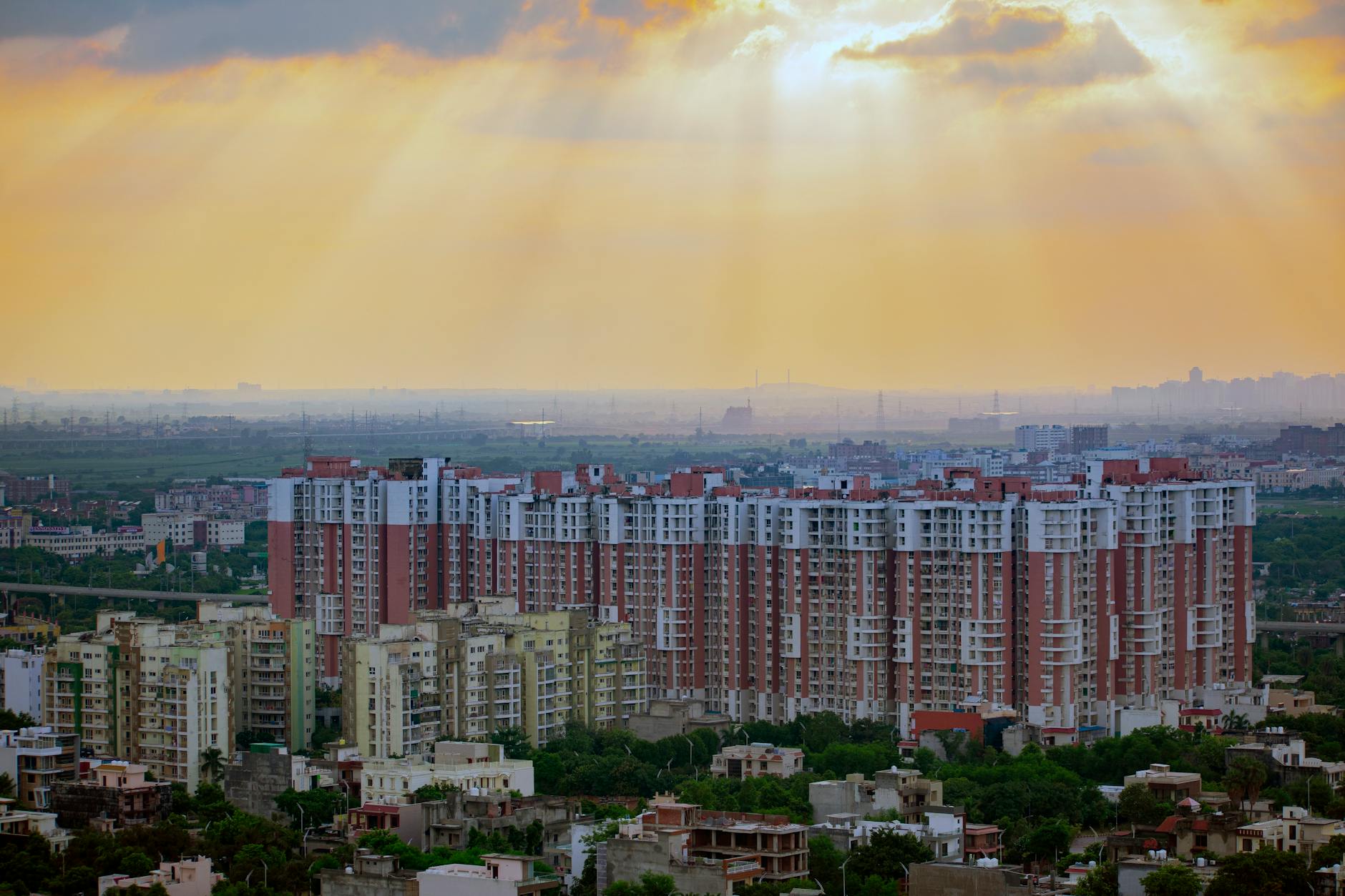
Delhi’s geography in the Indo-Gangetic Plain transforms it into a natural pollution trap. Unlike Mumbai or Chennai, which benefit from sea breezes, Delhi’s basin-like location, bordered by the Himalayas, restricts air movement. Winter months from October to February worsen this, as temperature inversion creates a ‘lid’ trapping pollutants. Research by the Council on Energy, Environment and Water (CEEW) highlights how stable atmospheric conditions during this period force low-emission pollutants to accumulate, even as wind speeds drop below 5 km/h.
While stubble burning in Punjab and Haryana draws blame, it accounts for merely 10-15% of Delhi’s PM2.5 levels. Experts like CEEW researchers stress local sources—vehicles (30%), industrial emissions (20%), and waste burning (10%)—as equal contributors. The odd-even car rationing and industrial curbs, though politically visible, barely dent overall PM10/2.5 levels that stay 5-10 times India’s safe limit.
Stage-I GRAP’s current turtle-entry actions—construction curbs, road dust control—have modest impact. Without addressing methane from landfills, diesel fleet modernization, and regional stubble burning through satellite tracking, Delhi’s lung capacity will remain compromised. With November’s fire-prone season approaching, experts warn this is India’s ‘dil’—the beating heart of a toxic smog crisis.