


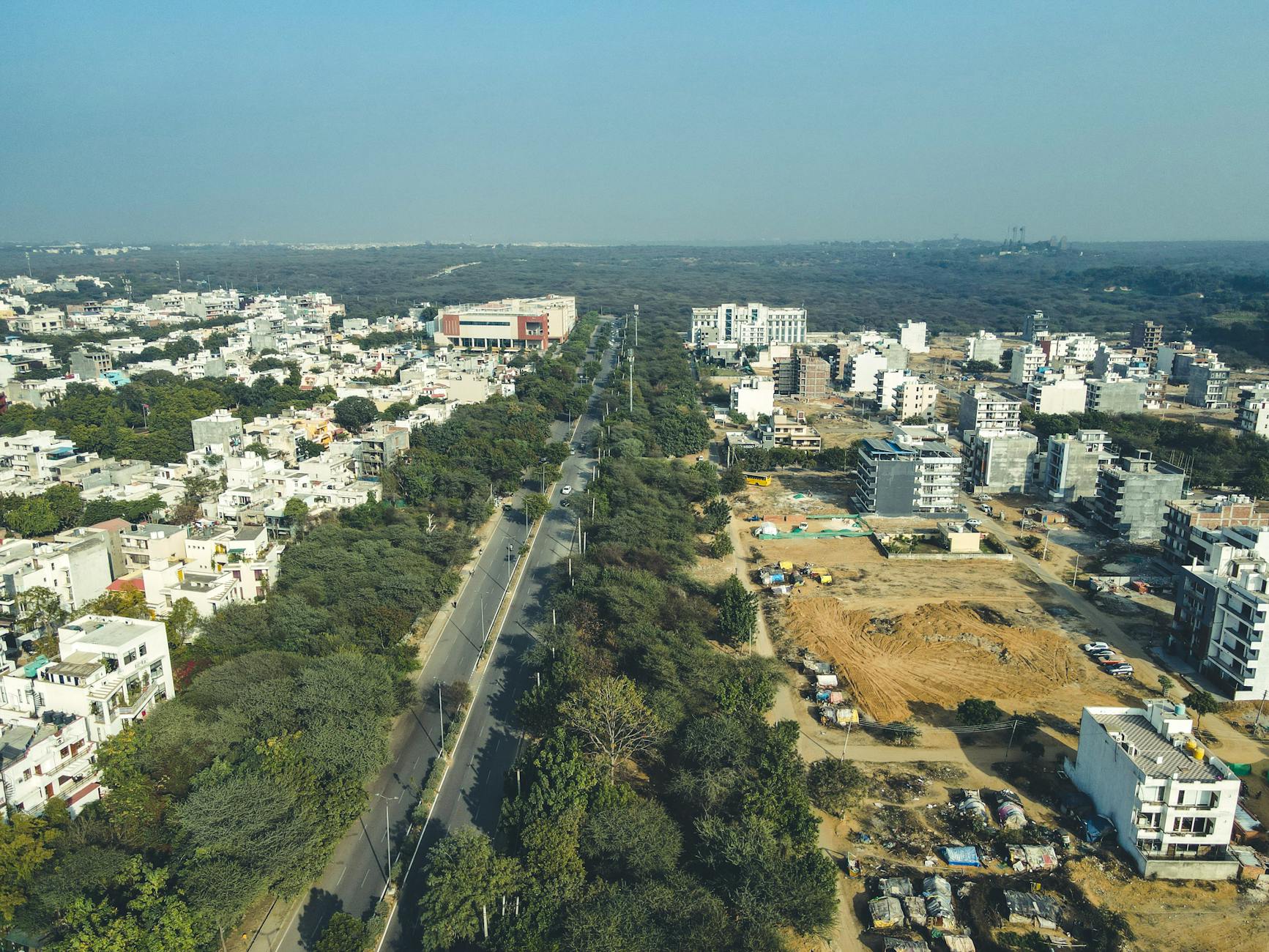
Addressing Gurugram’s Water Crisis: Practical Steps for Residents
Gurugram faces a severe water shortage as demand eclipses supply. Residents can adopt local initiatives and government schemes to secure reliable water for daily life.
Gurugram faces acute water shortages as demand outpaces supply. Residents can adopt simple fixes and tap into government schemes to secure reliable water.
Water Shortage, Gurugram, Haryana, Water Conservation, Rainwater Harvesting, Municipal Corporation, Sustainable Water Management, Groundwater Depletion, Delhi NCR, Water Supply
Water Availability and Current Challenges
The Gurugram Municipal Corporation (GCMC) records an average per capita water use of roughly 120 litres per day, significantly below the national average of 215 litres. While the city receives supplies from the Delhi Water Board (DWB) and the Haryana Water Resources Department, seasonal monsoons and unconstrained groundwater extraction have left many households relying on a 30 % deficit. In 2024, Gurugram’s annual rainfall totaled 630 mm, 40 % below the 2020-2023 average. Simultaneously, the aquifer has dropped by 12 m, rendering many borewells unreliable.
Municipal Initiatives and Policies
The GCMC’s “Blue Crescent” project aims to raise the monthly water supply to 200 litres per capita by 2026 through pipeline rehabilitation and demand‑side management. Under the Haryana Water Resources Act, 2012, residents can apply for a “Rainwater Harvesting Permit” by submitting engineering drawings and a land‑ownership proof to the local ward office. The city also runs a “Water Audit” scheme, offering a 10 % tariff waiver for households that complete a certified audit of their water usage.
From July 2025, GCMC has implemented a tiered pricing system: the first 1,000 litres per month are charged ₹2.00 per litre, the next 1,000 litres ₹2.50, and any consumption beyond 2,000 litres ₹3.00 per litre. This structure incentivises ration‑accurate consumption and discourages bulk wastage.
Community‑Driven Solutions
Local NGOs such as WaterGuard Gurugram conduct 20‑hour workshops on greywater recycling and low‑cost solar chlorination. Residents participating in these programs received a ₹5,000 discount on their monthly municipal bill for the next six months. The “Community Water Bank” model, piloted in Sector 23, allows households to pool residual rainwater into a communal tank, shared during peak shortage periods. Over the past year, this initiative reduced individual consumption by 15 %.
Neighbourhood‑level metering projects, introduced by GCMC in 2023, now allow real‑time monitoring on a household’s mobile app. Users can see usage spikes and set alerts. The app logs average purchase value for different tariff tiers, enabling strategic scheduling of high‑volume tasks such as washing and irrigation.
Private Sector Strategies
Major real‑estate developers in Gurugram are now mandated by corporation ordinances to install rooftop rainwater harvesting systems covering 70 % of their total built area. They receive a municipal subsidy of ₹25 000 per M² of covered roof, capped at ₹5 Lakh per project. The Delhi NCR Water Authority (DNWA) offers a 3 yr loan at 2.5 % interest for installing rain barrel systems in public parks, improving storm‑water infiltration.
Water‑marking solutions from companies like AquaSmart India integrate IoT sensors in residential taps to alert owners of leaks within 10 seconds. In real‑use studies across six sectors, households reduced leak‑related losses by 30 %. GCMC has partnered with these firms to provide a subsidised sensor pack to low‑income households, covered under the State Low‑Income Water Access Scheme (SLIWAS).
Immediate Action Steps for Residents
1. Verify and Update Meter Details: Log into the GCMC portal (gcmc.gov.in) and confirm your meter type. If you have an old analog meter, request an upgrade under the “Infrastructure Modernisation” program; it grants a ₹3,000 rebate.
2. Apply for a Rainwater Harvesting Permit: Navigate to the Haryana Water Resources Department portal (hwrc.gov.in), select “Rural & Urban Water Projects,” and complete the application form. Attach the following documents: land‑ownership deed, a 5‑year engineering design, and a photograph of the proposed roof area. Processing takes 21 days; the permit cost is ₹1,200.
3. Enroll in the Greywater Recycling Program: Visit your ward office and meet with the local water officer. Submit your household income certificate and a brief plan of intended reuse (e.g., toilet flushing, garden irrigation). Qualified families receive a 12 % tariff concession for one year.
4. Register for the Water Audit: Download the audit checklist from the GCMC website. A certified auditor will evaluate usage patterns. Once the audit confirms three moons of reduced consumption, apply for the 10 % tariff waiver via the portal.
5. Plate the 7‑Minute Check: Each evening, monitor taps for any leaks or drips using the city’s app. Report any defective pipe or faucet via the “Water Issues” button; in 2025, this proactive reporting saved the municipality ₹8 million in potential losses.
These actions not only ease your monthly bill but also contribute to Gurugram’s overarching goal of achieving a self‑sufficient water supply by 2026.
Pro‑active water stewardship today ensures clean, enough water for tomorrow’s thriving Gurugram.

